The magic of journal
CLARITY
CREATIVITY
Write it down…
It’s a very common saying — and yes, write it down. But not just your shopping list.
Think about why you write a shopping list in the first place. You don’t want to forget what you need. You don’t want to be distracted. When you walk into a shop, the offers are tempting, especially if you’re tired or hungry. Without a list, it’s easy to leave with things you didn’t intend to buy and forget what actually matters.
Writing things down brings clarity. It helps you stay on track when distraction, uncertainty, or emotional overwhelm appears.
So why don’t we do the same with our inner world?
Journaling can become a kind of safe list — something you return to when you’re struggling or emotionally challenged. It can hold reminders, intentions, and gentle “what to do” instructions for moments when clarity feels far away.
Journaling is a simple but powerful way to stay connected to yourself between therapy sessions. It creates space to slow down, notice what is unfolding within you, and remain in gentle curiosity about your inner world. Rather than analysing or fixing, journaling invites awareness — of thoughts, emotions, sensations, and the subtle relationship between intention and action.
When we write regularly, we begin to notice patterns: how we respond to stress, what supports us, what pulls us off course, and what helps us return. This reflective attention supports integration, allowing insights from therapy to settle more fully into everyday life. Journaling becomes a quiet companion, helping you stay aligned with what matters to you, even as life moves quickly.
Gratitude often weaves itself naturally into this practice. By intentionally noticing what is supportive, meaningful, or steady — even in small ways — we encourage neurological shifts that support learning, emotional regulation, and resilience. Over time, this helps the nervous system orient toward safety, possibility, and self-trust.
Journaling is not about doing it “right.” It is about meeting yourself with honesty, care, and kindness. Each page is an invitation to listen more closely, learn from your experience, and step forward with greater clarity and compassion.
4-Week Somatic Journey
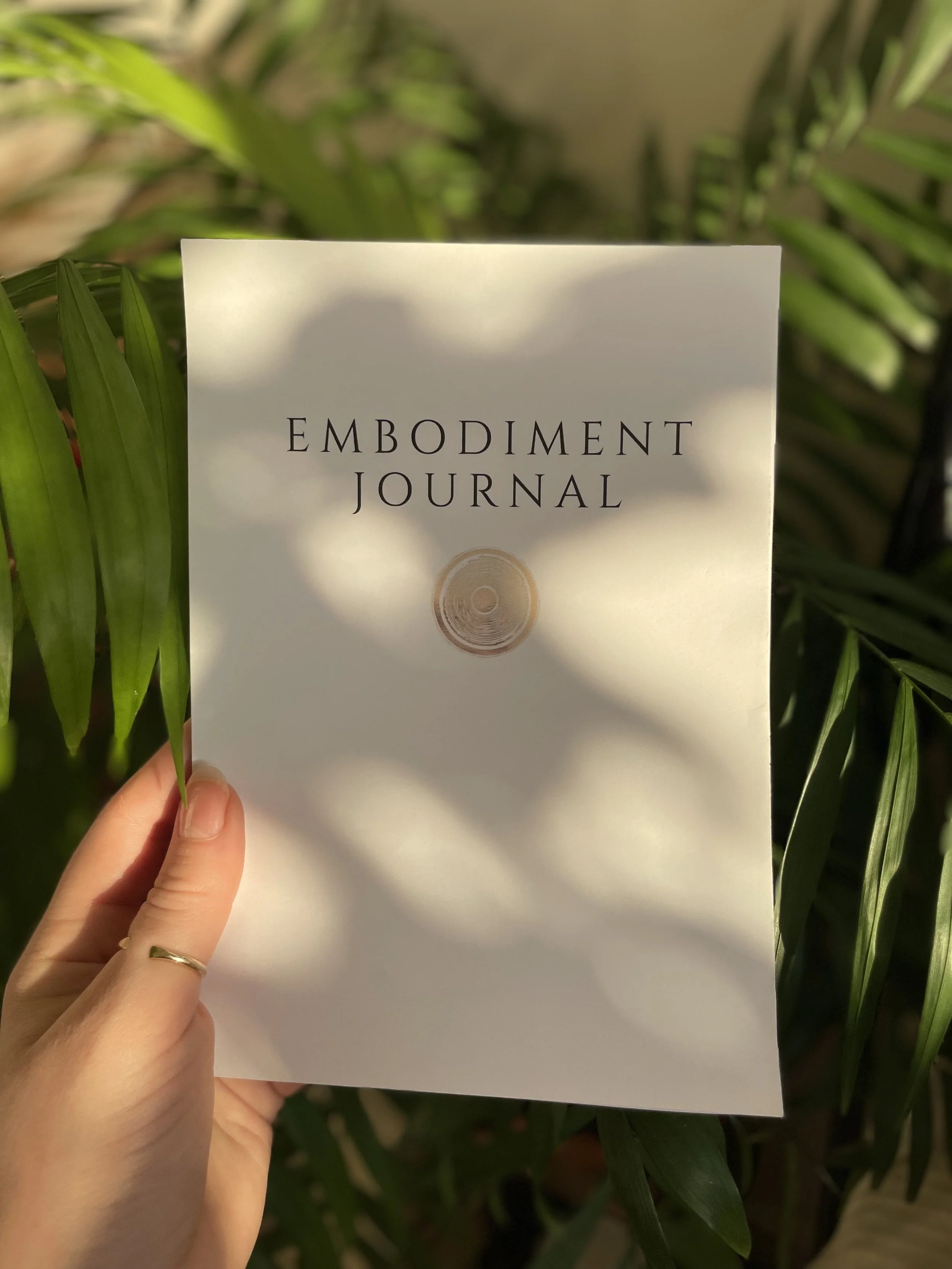
28 Days of Self-Attunement
Reconnect with your body, your inner rhythm, and the quiet wisdom beneath your thoughts.
This 4-week Embodiment Journal gently guides you into a deeper relationship with your body, your emotions, and your mind - without pressure, expectation, or perfection.
Each day offers one simple yet profound non-triggering somatic question to help you return to yourself: to notice, to feel, and to meet your experience with more clarity and presence.
You can write a single word, a sentence, a paragraph or draw, sketch, and let your creativity lead.
The goal is not perfection; it’s presence.
At the end of each week, a Gratitude Reflection Page invites you to reconnect with what nourishes you.
In the final section, you’ll find a Resource List where you can gather your internal and external supports - valuable reminders to return to when life feels overwhelming or unclear.
How to Use This Journal
These daily questions are designed to bring you out of mental loops and back into the wisdom of your body, helping you navigate life with more ease, clarity, and self-trust.
I recommend spending 5–15 minutes in the morning with the day’s prompt - reading it slowly, sensing into your body, perhaps writing a few words.
Later in the day, return to the same question and notice what has shifted. You may find it naturally arises throughout the day; simply meet it with curiosity. It’s also absolutely okay if no answer comes.
Move at your own pace.
Revisit a question any time your mind drifts or you feel disconnected.
Let your answers be honest, incomplete, or evolving - write the first thing that comes, even if it makes no sense yet.
Writing is optional: drawing, symbols, colours, or a single word are enough.
There is no right or wrong way to do this - only your way.
What This Journal Supports
Returning to your body throughout the day
Understanding your emotional landscape with more softness
Strengthening emotional resilience
Recognising patterns and responses with curiosity
Building trust in your inner signals
Deepening your connection to grounding, presence, and inner safety
This journal is a gentle companion for anyone longing for clarity, steadiness, and a deeper relationship with themselves - perfect for both beginners and seasoned somatic explorers.
What’s Inside
28 daily embodiment questions
One for each day, designed to invite grounding, emotional awareness, and inner connection.4 weekly themes
Arriving in the body · Listening beneath sensation · Patterns & choice · IntegrationWeekly Gratitude Pages
Gentle reflection pages that help you remember what is working and build resilience through gratitude.Resource List
A space to gather your internal and external resources—something you can return to whenever you feel unsettled, overwhelmed, or unsure of what you need
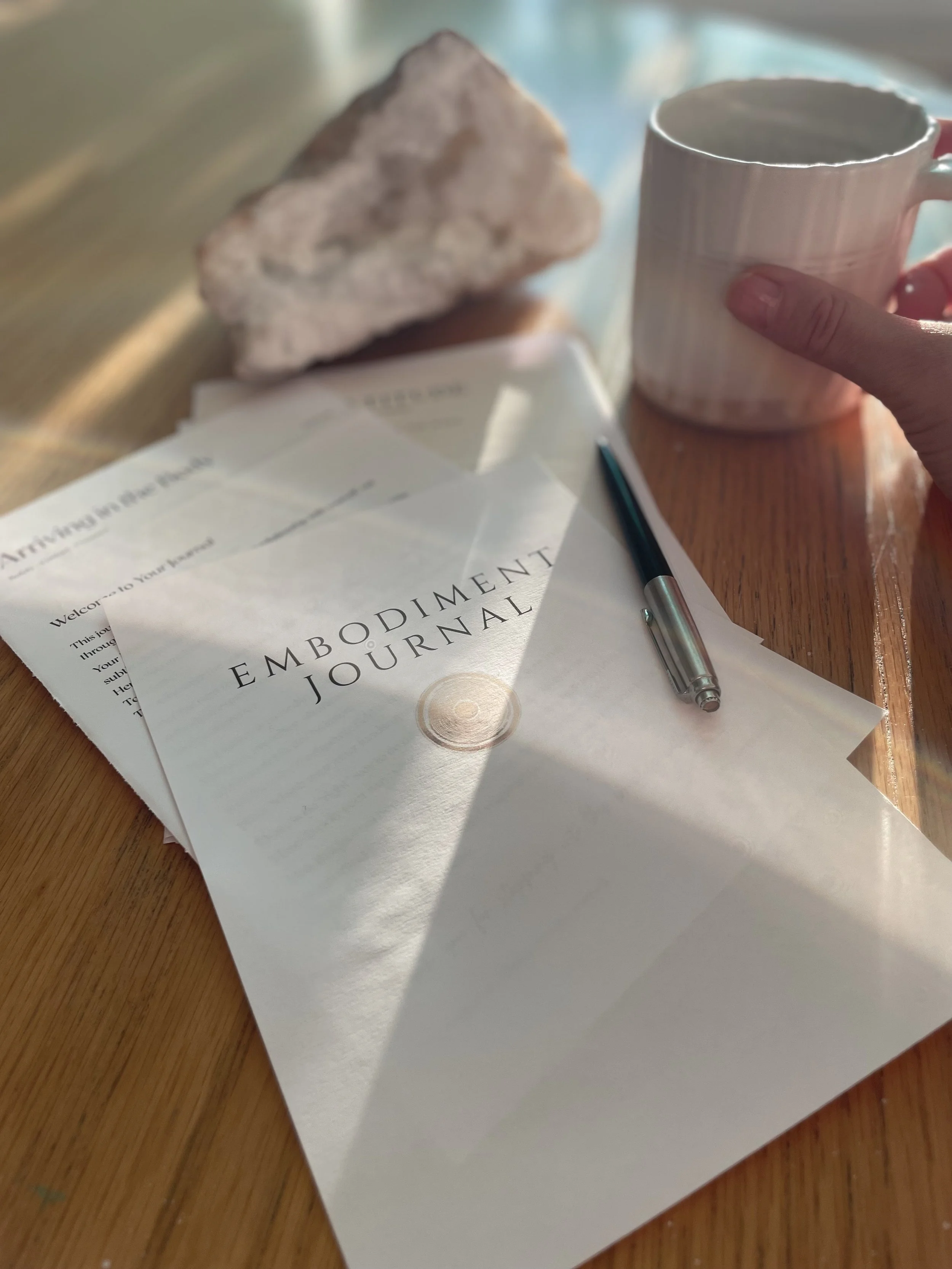
Research That Supports the Magic of Journaling:
Expressive Writing and Emotional Health:
Research by James Pennebaker and colleagues found that writing about emotional experiences can improve immune function, decrease stress, and support psychological well-being. Structured expressive writing has been linked to reductions in anxiety and depression symptoms over time.
Journaling and Cognitive Processing:
Studies suggest that writing about thoughts and feelings helps people process events more deeply and integrate experiences, which can lead to better emotional regulation.
Gratitude Journaling and Happiness:
Research has shown that regularly writing about things you’re grateful for increases positive affect, enhances emotional resiliency, and improves overall life satisfaction.
RITUAL
·
WELLBEING
·
JOY
·
ALIGNMENT
·
RITUAL · WELLBEING · JOY · ALIGNMENT ·
-

Neural Integration
Journaling helps link emotional and cognitive brain networks, allowing experiences to be processed rather than stored as unresolved stress.
-

Nervous System Regulation
Writing slows mental reactivity and supports a shift from sympathetic activation into greater parasympathetic balance and safety.
-

Memory & Learning Consolidation
Reflective writing strengthens neuroplasticity, helping insights turn into embodied learning and more consistent behaviour change.
-

Trauma-Informed Self-Agency
Journaling offers choice, pacing, and control — supporting empowerment, orientation, and meaning-making without re-exposure or overwhelm.
“We do not write in order to be understood; we write in order to understand.”
Thomas Merton